
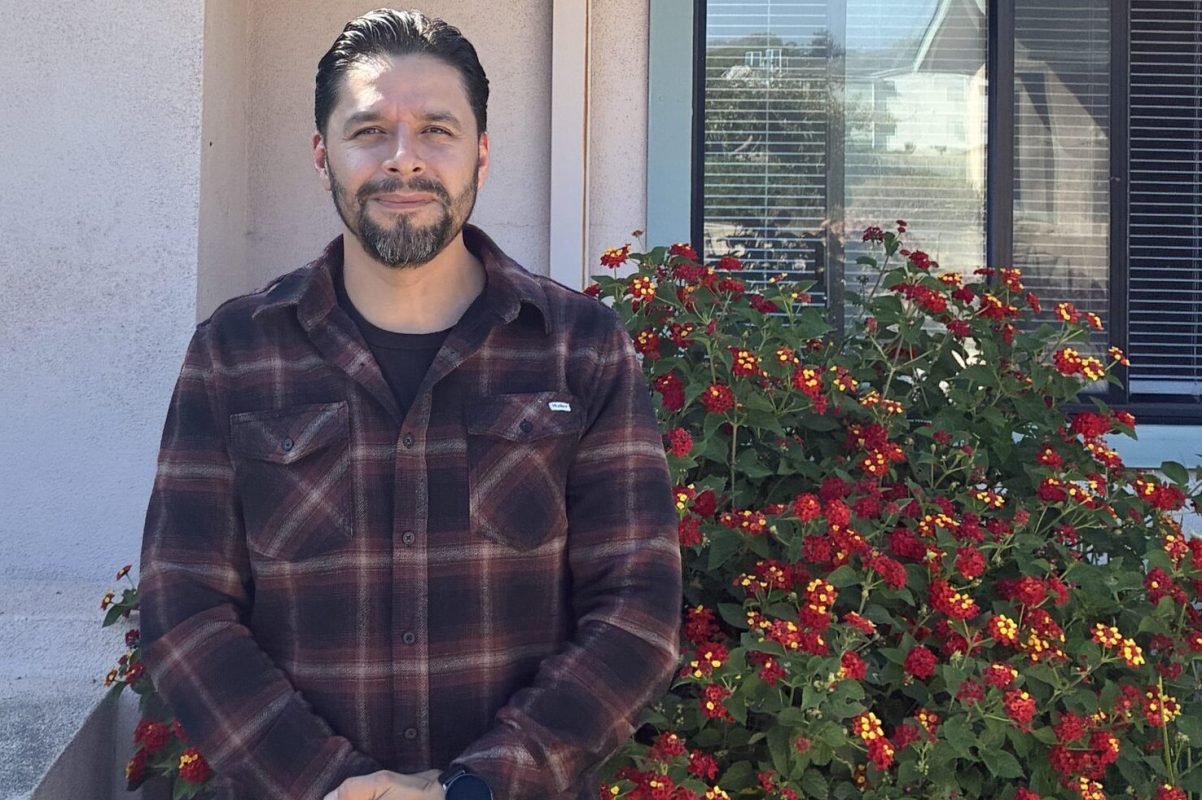
Ten years ago, Manuel Hernandez joined Interim as a counselor. He had already worked with people reentering the community after incarceration and with youth in foster care, experiences that showed him how meaningful it could be to offer guidance when someone was navigating uncertainty. When he learned about Interim, he saw that same sense of compassion in the organization’s work. “It felt like something that I was already doing, working with a slightly different type of population,” he recalled.
A decade later, Manuel is an Assistant Program Director at Manzanita Salinas, where Interim provides crisis residential mental health treatment and support. His path has taken him through several Interim programs, including our transitional housing program – Shelter Cove, our homeless outreach program – MCHOME, and Keep It Real, which is an outpatient dual diagnosis program. Each program has given him a different perspective on supporting people living with mental health challenges, but his years at Interim have also changed how he thinks about recovery itself.
Creating a Place People Can Turn To
At Manzanita House, Manuel works with adults following a mental health crisis, helping provide a supportive environment where they can stabilize and prepare to return to their lives in the community. No two days look quite the same. He may review referrals, support counselors, facilitate groups, provide direct services, or respond to an immediate need. What remains consistent is the teamwork required across morning, evening, and overnight shifts to keep that support connected.
One lesson has become particularly important to Manuel: mental health recovery is rarely a straight path. At Manzanita, that sometimes means welcoming back someone who has received services before. Rather than seeing a return as failure, Manuel sees something else. “Clients see something positive about the program that is helping them, that is working for them,” he said. For him, returning can demonstrate trust. Someone experiencing another difficult period knows there is a place where they have felt safe, supported, and able to ask for help.
Relationships are an important part of creating that environment. Manuel has watched residents arrive without knowing staff or one another and gradually begin forming connections. Those relationships can create a sense of belonging during a vulnerable time and reinforce something he has come to value throughout his career: meeting people where they are with patience, compassion, and without judgment.
Growing Alongside the People We Serve
Manuel’s understanding of the work has also become more personal over the years. Early in his career, he remembers focusing primarily outward: What information could he share? What resource could he provide? How could he help someone else? Eventually, he began looking inward too. “I too have my own set of challenges and issues and problems, my own stressors,” he said. “I too am walking along the journey with our clients.”
That realization has helped sustain him through the difficult days. Manuel compares the feeling to an earlier chapter of his life when he spent years committed to the gym. What motivated him was being surrounded by people working toward improvement, even if their individual goals differed. He sees something similar at Interim. Staff are working to help improve the quality of people’s lives while clients themselves are attending groups, meeting with counselors and psychiatrists, and putting their own effort into recovery. “Everyone is striving towards a similar goal,” he said.
That perspective extends beyond Manzanita House. After working across several Interim programs, Manuel hopes to see the organization continue expanding housing and mental health services for people who need them. He sees housing as a foundation for stability and points to developments such as Sun Rose and Marina Kai as examples of that continued growth. For Manuel, addressing needs such as housing, employment, and mental health support can give people greater opportunity to move forward.
After 10 years, Manuel still describes Interim as the place he feels he needs to be. His role has changed, the programs have changed, and he has changed too. What has remained is a belief in treating people with kindness and respect and continuing to show up, even when progress takes time.
It is also the same encouragement Manuel remembers receiving years ago and now passes along to others: “Keep going. Keep at it. Don’t give up.”
Read more stories from Interim’s clients, staff, and community on the Interim News page: https://www.interiminc.org/interim-news/