
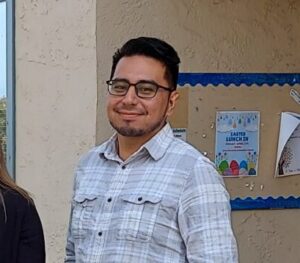
Pablo Alvarez Rosas social work journey reflects a strong call to service and leadership in community-based mental health.
I didn’t really choose the field of social work; those who pursue this type of work often feel a calling. It’s not a field where we will become wealthy. What drew me in was service—service to the people in our communities, to those who have difficulty building a good quality of life, to the vulnerable, and to the marginalized. The decision was the result of a gradual realization of my values and interests, including my insatiable curiosity and desire to learn, and my excitement in sharing knowledge. This guided me from one step to the next. Social work allows me to apply my skills at different levels, from individual support at the micro level to social action and policy at the macro level.
As I approach eight years of employment with Interim, Inc., I’ve witnessed the agency actively address the challenges of improving access to care for communities of color. For instance, the opening of a new office in Soledad has been significant, given that Soledad has historically been underserved due to its distance from Salinas and the Peninsula. Interim also gave me opportunities to discuss mental health and substance use recovery on Radio Bilingue, which helps educate the community and destigmatize mental health conditions and the need for care. As a Latino, I understand the many barriers faced by Latino and Hispanic individuals, as well as other communities. Common barriers include the inability to take off work during traditional business hours, lack of transportation or distance from services, and sometimes poor service quality. The stigma of mental health, both within the dominant culture and communities of color, also makes individuals less likely to seek help or acknowledge the need for care. The misrepresentation of mental health in the media can also instill fear.
In my role, I emphasize the importance of understanding cultural differences and similarities, as our identities are shaped by our experiences and interactions. People do the best they can with the resources available to them. If they could do better, they would. Adopting this perspective fosters kindness towards others and ourselves, recognizing that everyone faces struggles.
In my own struggles, stoic philosophers have been mentors to me, particularly Marcus Aurelius, who said, “It doesn’t matter if it’s hard or easy. If you’re cold or warm. What counts, whether you’re a kid or a king or anything in between, is that you do the right thing.”