
A Collaborative Approach to Supportive Housing for Mental Health
“It’s not just about helping people, it is about respecting where they’re at.”
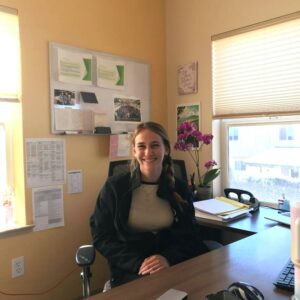
When Eden DeYoung joined Interim, Inc. as Program Director for Shelter Cove and Hope Housing, she brought with her a strong foundation in substance use treatment and a deep curiosity about the intersection of mental health, trauma, and recovery.
“I started out wanting to help people with substance use,” she explains. “But the more I learned, the more I saw how closely mental health and substance use are connected. Most people are navigating both.”
That perspective now shapes her work in supportive housing for mental health, where stability is only one part of the journey. At Interim, housing is paired with care, connection, and opportunities for growth, something Eden had been searching for throughout her career.
“Coming here felt like a dream,” she says. “Programs like this didn’t exist where I worked before. It’s exactly what I had hoped to find for the people I work with.”
Her role spans two distinct programs. Shelter Cove offers transitional housing with a two-year structure, while Hope Housing, a newer partnership program, brings together multiple agencies to support clients on a path toward permanent housing. The work is complex, requiring coordination across systems, but also deeply rewarding.
“We have a lot of moving parts,” Eden shares. “Different agencies, different roles—but ultimately, we’re all working toward the same goal: helping people find stability and move forward.”
Building Community Through Engagement and Leadership
For Eden, supportive housing is not just about providing a place to live—it’s about building a sense of belonging.
“One of the biggest things we focus on is community,” she says. “People don’t just need housing. They need connection.”
That belief has led to creative ways of engaging residents and strengthening relationships across the programs. One example is the “Rad Dish Wall,” a monthly cooking challenge where residents prepare dishes around a chosen theme. Winners are featured on a display wall, celebrating creativity and participation.
“It’s been really fun to see how people express themselves,” Eden says. “Even residents who don’t cook come out to see what others have made. It brings people together.”
In addition to these activities, Shelter Cove hosts weekly Resident Council meetings, where clients are invited to share feedback, suggest ideas, and help shape the community. Recognizing that not everyone feels comfortable speaking in a group, Eden and her team introduced a new layer of peer leadership through Resident Advisors.
Residents apply for these roles, gather peer support, and take on responsibilities that help guide and strengthen the community. The group is already exploring ways to increase engagement and develop restorative approaches when challenges arise.
“It’s about giving people a voice,” Eden explains. “And creating space for them to support each other.”
Meeting People Where They Are
At the core of Eden’s work is a simple but powerful philosophy: change can only happen when someone is ready.
“We can have all the tools, all the plans,” she says. “But it must come from the client. Our role is to meet people where they are and support them in taking the next step.”
That mindset shapes everything from one-on-one support to larger program design. Whether someone is actively engaged or just beginning to take small steps, each moment matters.
“If we can help one person move forward, that matters,” Eden reflects. “That’s what keeps me hopeful.”
Through collaboration, creativity, and a commitment to community, Eden continues to help build a model of care where hope, housing, and healing happen together.
Discover more stories like Eden’s on our Interim News page: Interim News